Showing posts with label relationships. Show all posts

Monday, May 30, 2016

Perfectionism: the Enemy of Relationship

 Courtesy of www.quotationof.com
I am a (recovering) perfectionist.

I wrote my name at three and started reading at four. In kindergarten, I had a conditional friend who would stop playing with me when I could read words she couldn't. In the second grade, I was called "Brainiac" and "Walking Dictionary," as if those were insults. I was threatened with getting beat up because I consistently won academic competitions and awards, and I didn't get the lead in the fourth grade play because my classmates thought it was enough that I was class president multiple times, a cheerleader, and, of course, the teacher's pet. I was not just good at whatever I set out to do, I was the best. If I couldn't be the best, it wasn't worth doing. 

In my years working as the coordinator of a women's leadership organization at a higher education institution, my approach to leadership evolved. Witnessing perfectionism in the young women I was leading showed me how destructive such a trait could be. I saw women taking on all of the work meant for a team, because, "if I want it done the right way, I have to do it myself." I witnessed the resentment that would eventually come as a result of not being able to say no. And I also saw arrogance and pride alienate really great young women from their peers. I knew that much of this attitude came from me - the person who thrived under pressure, who took on way more than one human should be capable of;  I was their example of a woman in a leadership position. Yet, the perception that I had it all together was just an illusion. There were so many nights when I would drive home after a successful event, feeling accomplished, but knowing that when I got home there was no one with whom to share my achievements. No celebratory meal or glass of champagne awaited me; nothing but an empty apartment, a shower, and bed.

At some point, I realized that I didn't want the young women I was mentoring to feel as alone and empty as I did. I wanted them to feel supported by one another and to know that perfectionism was not only unattainable, it was harmful to their relationships. I don't remember the day I said this phrase and why, but once I said it, it stuck. I'm sure we were debriefing an activity when I said, "Strive for excellence, not perfection." I remember thinking that we weren't holding ourselves accountable for finishing well because we were spending so much time aiming for perfection - an impossible task. We would give up or procrastinate rather than try and fail, and in avoiding failure for the sake of achieving perfection, we were letting each other down. I began to tailor my training sessions around working to develop areas in need of growth while celebrating our strengths. Our activities were created with the goal of appreciating our respective journeys rather than awaiting a perfect result. The outcome was that our relationships with each other grew stronger than ever, more genuine and authentic. I am proud to say that many of the women grew in confidence; not just in themselves, but in each other.

It's been a couple of years since, and I currently work with young people ages 12-18 who are gifted and high achievers. They, much like I was in elementary school, are the "walking dictionaries" among their peers. But in this age of technology that moves faster than the speed of light, young people are smarter than they've ever been. Because my students live around the country, I have to schedule time to talk with them over the phone. Often it is so challenging to schedule calls, not because I have so many that need to fit into my own schedule, but because they have multiple activities scheduled throughout the week. When talking about any endeavor, they must win, they must be the best, the first. In them, I see myself as a young child - needing to be the best in order to feel accomplished. Needing to be perfect in order to be valued and affirmed.

I struggle now, because high achievers expect the person advising them to be the most knowledgeable, the most able to get them into the best colleges and universities, the one who has the answers to all of their questions. They trigger the perfectionism I'd thought I'd recovered from. I find myself tipping the balance between work and life - once again, waiting to hear the words, "well done," but coming home to the emptiness borne of my own ambition to be perfect. No one benefits from striving for perfection, least of all those of us who never fail, because we are afraid to take the risk of trying something new and different. 

What if the "new and different" is what we need in order to live the lives we were intended to live? What if striving for perfection is keeping us from the very thing we need in order to feel fulfilled in this life - relationship and fellowship with others? What if, instead, striving for authenticity in our relationships is actually what will draw unto us that which is perfect, and good, for us

As with anyone who is recovering from an illness, there's a possibility of relapse. But, to paraphrase the cliche on recovery, "the first step is admitting the problem." I humbly admit that I have a problem with perfectionism, but I won't continue to strive for it, nor for excellence. Rather, I choose to strive for authenticity. At the end of my life, I don't want to be able to say that I accomplished so many things all alone. I want to say that I left love in the hearts of many. 


Wednesday, April 1, 2015

Losing Me, Finding Me

I was going to shut this blog down for good a few weeks ago.

I realized that the readership I once had doesn't seem as enthusiastic about reading my blog posts. When I first started this blog, I would get comments and messages saying that my words resonated with people. People would share their innermost thoughts and feelings with me, telling me they felt understood, and in those moments I realized that my words had the power to heal. But they don't seem to have the same effect these days.

I've written about happiness, love, feminism, racism, my students - anything I have been passionate about. And I often share with the understanding that I am taking a risk by saying too much, giving too much away, just BEING TOO MUCH. There have been times that I've sobbed while writing and times when I've felt triumphant and even other-worldly, as if someone were writing through me.

Not so much lately.

I've been struggling with pretty much everything in my life. Nothing has been easy in the past year since I uprooted myself from a stable job and a place where I was accepted and loved as is, and came to this new place where no one knows me and no one seems to care how "amazing" I used to be. I am in a place where authenticity is not something to be achieved, because it is not understood as a concept. As much I am used to change and growth, I am in a place where people "are who they are" and I should not "expect them to change." It's like hitting brick walls and expecting them to bounce back. There's no other way to describe my experience so far. As a result, I have been expending energy becoming defensive, protected, and guarded in every relationship. I have become everything I've worked so hard to let go of, everything I told the young women in my life not to be. I let life beat me.

I know this because last week I was talking with one of the young professionals I supervise, and as I was looking for a way to resolve a problem, I decided that taking myself out of it would demonstrate that my ego was not as important as helping the team to run well. She said something to the effect of, "You are saying you are being humble in this instance, but you really sound defeated." Finally, someone truly understood my experience as of late, and I could feel the entire universe releasing a long-held, pent-up breath. My spirit told me, "You've lost who you really are."

Two weeks ago, I met a man with whom I'd been corresponding through a dating site and phone conversations. It wasn't easy at first, as he continues to remind me. "Remember when you wouldn't return my texts for four hours? When you would tell me specific times to call you and you wouldn't pick up?" What he knew, without me saying it, was that in those initial calls or texts, I was finding reasons not to engage. I didn't want to try - I had tried before, and it didn't work out. I had tried, and gotten so unbelievably hurt and betrayed that, even though I wanted to try again, I didn't want to try again. I got super defensive and refused to acknowledge those texts and calls. Then we had a snow day, and he called while I was doing nothing. I just picked up because, in that moment, I had no reason not to. The first words out of his mouth were, "Let me ask you this: Do you WANT a relationship?" He proceeded to tell me exactly how he felt about my antics, and somehow, rather than hang up on him for being so aggressive, I listened. And we talked. And somehow, two hours had gone by. Two hours of my precious time, that is usually planned. I plan phone conversations, okay? And at the end of those two hours, we got off the phone much in the same way teenagers do. "I'm really going to say goodbye now, okay? I'm really going to hang up." As I hung up, I breathed a sigh of surprise and relief, the universe sighing and smiling with me.

I talked to him again later that night after having cleaned my car off and getting back upstairs feeling a little sore. He told me to run a hot bath, get some candles and a glass of wine, and to just relax. I did it simply because he told me to, and I was so relaxed that I slept like a baby and felt as if I had given something to myself that I had not in such a long time: the gift of self-care. I don't know why I had not ever thought to pamper myself in that way. Yes, the bath was relaxing, but I left that experience with more than loosened muscles; I left feeling valued and appreciated by ME.

Photo Credit: M. Gerade
In the past two short weeks, this man has somehow reminded me that being spontaneous is a good thing, that everything doesn't have to be planned, that any time we are able to, we should make the time to see each other, and no matter what we do or for how little time it may be, there is value in those moments. He frequently remarks that he likes me - the "conservative" me that he first met through online photos, our first conversations, our first date - and the me who has opened up and accepted to go on this adventure with him. He believes that I have grown in such a short amount of time, but what he doesn't know is that who he sees now is really me. Being guarded and evasive was my defense mechanism, but he knocked that wall down as soon as possible to get to who I really am, a loving, compassionate, funny person who is willing to stop planning and start living. Again.

I have found me again. And this is why I write this right now, regardless of who reads. Because this is a part of who I really am. I am creative. I am expressive. I am, sometimes, too much. And I love it. I love ME.

Saturday, December 13, 2014

Open Your Heart

Image Courtesy of Helen Green
It's the time of year when the streets are lit up with twinkling lights, people spend entirely too much money shopping for others (rather than, or as in my case as well as, for themselves), travel plans are made, and families and friends come together. "Elf " is on almost every day, sappy holiday romance movies fill the Hallmark Channel, and tears may show up at any time because, like the Grinch, our hearts are growing three sizes too big. It's Christmas time. Holiday time. Winter break.

This post is about romance, dating, and love. It's about getting up again after having been down for a very long time. It's for those who like the feeling of their heart swelling and tears showing up in the corners of their eyes. And if that's not you, you should probably read this. Because this is most definitely for you.

Over the past two months, I started dating someone. He is the first person I've consistently dated in a very long time and after having been in an on-again, off-again relationship with someone who pretty much committed every sin one possibly could against the person he supposedly loves. That relationship ended for good when he told me he'd had a child with someone three years prior. (Yes, while we were probably "off", but when we got back "on", he still waited three years to tell me.)  And that relationship was one of the most heart- and gut-wrenching relationships of my life. That person seemed to be my soul mate, we understood each other, and we knew each other inside and out. Very intense.

When I moved from upstate New York to the Washington, DC area, I had done a lot of cleansing. I got rid of a lot of old stuff, including my old bedroom set from when I was married. I wanted a clean slate in every part of my life, including my love life. I decided, just three months after finally settling down with a new apartment and new job, to go online and see if I'd meet anyone. I found a free trial for a popular dating site, and was pleasantly surprised to see that I had gotten several emails from men in the area. I started corresponding with a few, but some were duds, one was overzealous (he offered to wash and blow dry my hair and arch my brows!), but one seemed pretty humble and unassuming, and he was respectful. He actually caught my attention because he made a reference to one of my photos that told me he paid attention to national news and politics, which is kind of one of my obsessions. We met after corresponding for a week or so and had a nice conversation. It went well and he said that he wanted to see me again.

Interestingly enough, my ex surfaced around that time as well, asking if he could come and visit. I didn't say no, but those plans ended up falling through, so I was able to meet Mr. Nice Guy.  Why didn't I say no, you ask? Because when it came down to actually going out on a date, I thought I couldn't do it. I thought that my ex, Mr. A-Hole, was still too present in my heart. He was talking about trying to work things out and starting over (as usual), and although I knew that it would never work between us, I still had a teeny glimmer of hope that maybe things could get better, if I gave him another chance. Truth be told, I was so used to Mr. A-Hole, and I was scared to meet someone new. God, fate, and destiny did not allow us to reunite, especially during a time when I was attempting to start fresh, and I learned a huge lesson after these past two months.

A couple of days ago, after six dates with Mr. Nice Guy, things ended. Mr. Nice Guy, it turns out, has some difficulty dealing with life when it doesn't go exactly as planned. I wanted to like him because he was nice to me. And then he wasn't very nice to me. We went out a couple of times in DC to see some very nice Christmas shows, and during the entire time he found things to complain about, and he seemed to "jokingly" put down my suggestions, though he is not much of a decision maker. He didn't want to walk two blocks to the theatre from the parking garage. After the second evening of listening to him complain incessantly and blame me for his having to walk, including pretty much cursing me under his breath, I told him he had a choice, and he never had to go anywhere with me again. He dropped me off, and that was the last time I heard from him.

On one of our dates, I asked Mr. Not So Nice Guy why he was single. He seemed nice and he wasn't unattractive. He said that he doesn't meet a lot of people he can relate to (I was one of those people) and that, having been alone most of his life, he doesn't think very many people would be willing to accept his habits. After our last date, I knew why he was still single. He refused to open his heart up to anyone. It showed in how inflexible he was and how much he complained when he was out of his comfort zone. It showed in how he didn't want to get close to me at any point in our relationship. Every time he would kiss me good night, I could see how hesitant and awkward he was, how much thought he had to put into it. Even sitting in the theatre with him, I could see that he felt uncomfortable if our shoulders touched. He didn't want anyone sitting next to him, and as I watched other couples hug and kiss and be romantic, I knew that would never be us, no matter how many more dates we went on.

I find it interesting that the men I've come across, once hurt, find it so difficult to allow someone into their lives. I've been hurt, and I've felt utter loss, in the same ways the men I've known have. I have thought that I would never love again. I have felt betrayal and broken trust so deeply that I spent years not wanting to open up again. And yet, I know how alive I feel when I do open up, even just a little.

I'm sad for Mr. Nice Guy because I knew he was excited to meet someone he could talk to, who liked some of the same things he did. He seemed so used to things ending the way they ended for us a few days ago, as if that's how it usually goes for him, as if being "forever alone" is supposed to be his default status. If he had opened up to seeing walking a few blocks as an opportunity to explore, to spend time with someone he liked, to even have a romantic walk in DC at Christmas time, the night could have ended differently. Instead, he only saw things as an inconvenience to his comfort, and blamed me for his discomfort (even though he was driving and could have chosen a different place to park). So Mr. Nice Guy will go back to being alone, which is his comfort zone.

I'm happy for myself, because as I stated earlier, I learned a huge lesson about love. Although I thought my ex had a pretty firm grip on my heart, dating Mr. Nice Guy taught me that I could move on, that I could be treated the way I deserved to be treated, but also that I could determine when I wasn't being treated well and speak up for myself. It taught me that I could start over, that I could give love a chance, and that taking the risk of opening up feels better than withdrawing into my shell and freezing everyone else out.

My prayer is that Mr. Nice Guy learns that lesson soon, too.

Friday, April 11, 2014

Reunions

The Class of 1989 at our 25th Year Reunion
Last weekend, I attended my high school homecoming.  This was our 25th year reunion.  It seems almost unimaginable that I have been out of high school for that long, and though so much has happened since that June day in 1989 when I walked on the stage to "Pomp and Circumstance", homecoming always brings back wonderful memories of those younger, more carefree days, reminding me of who I am at my core.

The prospect of attending a high school reunion is often portrayed on television sitcoms as fraught with anxiety about several things, such as the inevitable weight gain or hair loss we have undergone, or the question of the level of success we have reached and if it is comparable to our peers' successes.  I'll be honest; even as I remembered how much I enjoyed my 20th year reunion, I still felt the same anxiety that usually transpires on those sitcoms.  While I was excited to attend the events, the Facebook event page showed that a lot of people were going who I was not close to in high school.  I imagined I'd be sitting at the bar alone, sipping a drink and watching my classmates trade fond memories and ask each other, "Who is that?" while watching me nurse my glass of Chardonnay.

I was also anxious about something else. There was a possibility that someone would be at those events who I'd told last year never to contact me again.  Since that moment seven months ago, I'd been concerned about this particular reunion.  He had broken my heart repeatedly, and while I had moved on from my past in many ways, I wasn't sure what my reaction would be if I did see him again.

It took me a long time to get ready on the night of our first event last Friday night, more so because my anxiety was making me feel physically sick than any kind of vanity.  But something made me go despite my fear of seeing him again.  I told myself that I wanted to go, that I wanted to have fun, I wanted to see my classmates even if they didn't remember me, and, somewhere deep inside, I wanted to know if I'd gotten stronger in the time since I broke off that connection completely.

He was one of the first people I saw when I walked in.  I was surprised by what I felt; a level of comfort that someone I knew was there, as opposed to the fear, or maybe even brokenness, I thought I would have felt.  But before I could even decide if I was going to walk past him or stop and at least acknowledge him, another classmate came up to me and said hello.  Then another, and another.  And little by little, almost every person in that room greeted me with a hug and a "Hi, Patty" (a nickname I don't remember earning in high school, but that's what almost everyone seemed to call me that night).  And before I could get very deep into socializing, he came up to me as well, giving me a long hug and telling me a whole lot of stuff that was just as sophomoric as if we were still in high school.

I moved on.  And I socialized, and had fun, and truly enjoyed being in this space with these people who I was not currently friends with, but who, for some reason, made me feel welcome, and even cared for. While I knew this person was there, I genuinely could not see a reason to let him, and the things he'd done to hurt me, ruin my night.  And I definitely had a great night.  (Let's just say YOLO was in full effect.)

At one point during the night, however, he came up to me and shared some news that took some of my breath away (and not in a good way).  He asked if we could get together before I left town, and I said okay.  We got together a few days later, and he shared a few more details.  As he did, I sat there, feeling like one boulder had settled into the pit of my stomach and another on my chest, so that I was not able to breathe.  He then asked if he could be a part of my life again.  We had a long conversation about what was wrong with our relationship and what the point of reuniting in any manner would be.  I was very clear that he'd had more than enough chances to do the right thing as it concerned me.  And while we both said we still love each other and still think about each other every day, I was still dubious about his true intentions for wanting to start over.

I went home and cried - I had held my emotions throughout the weekend, and with the additional information I'd been provided, I had more to be upset about.  And I cried, and cried some more.  And then I got angry. I felt a slow, long, simmering anger that continued throughout the week, threatening to manifest itself through Facebook rants and Twitter subtweets.  (Instead, I shared less emotional and more philosophical perspectives on accountability, love, and the like.) Of course, I asked myself if I could possibly start over with this person, someone who I'd felt emotionally and psychologically abused by, someone who had no empathy or compassion for anyone but himself.  Despite all of that, I did have to admit that I still felt connected to him.

During our lunch meeting, he asked me if there was anyone else that I was excited about.  If there was anyone that I loved or could imagine being with.  He asked (not for the first time) that if I loved him, how could I possibly be with someone else?  And I thought about that.  I wondered if I would be living a lie if I moved on with someone else.  Part of me wondered if he was right, and we were supposed to be together because somehow, even when things were hard or horrible between us, we still found a way to reunite.

Then I got past my emotions, and I thought about something else.  I thought about how friendly all of the men were throughout the weekend.  I thought about the men who let me know, to varying degrees, how attractive they thought I was.  I thought about those two men who checked to make sure I was okay on Friday night before I drove home.  I thought about the ones that I'd connected with after the reunion through Facebook or phone conversations, and how, in some ways, I felt more supported and more cared for after last weekend.  I'm not discounting the connections with the women - we always seem to be genuinely happy to be together - but it was what I noticed about the men made me realize something.  Those who were at our reunion events with their wives and significant others enjoyed being with them.  Showed them off in some ways.  Had fun with their partners.  Those who were there alone were attentive and enjoyable to be around.  I felt warm being around these people.  Not hurt, not anxious, not fearful.  And these men reminded me that men can be good; men can be caring and concerned about someone other than themselves.  They reminded me that I don't have to settle for someone who says he's always loved me, but was never able to demonstrate that love in any meaningful way.

Most importantly, this past week of reunions gave me the opportunity to assess where I am mentally, emotionally, and spiritually after having moved to a different state earlier this year.  The purpose of moving was to remove myself from a toxic environment and create opportunities for personal and professional progression.  After seeing this person, I was anxious that reuniting with him would take me back to a place I thought I'd moved past.  I thought that maybe he was supposed to always be a part of my life in some way, regardless of how much he continually hurt me.  And for a few days, I lacked the peace and contentment I'd experienced since making the decision to change various aspects of my life. But when I thought about what I've learned about myself in the past few months - specifically that I took a risk to make my life the absolute best it could possibly be, and that I AM BRAVE, and that I refuse to SETTLE and be stagnant - I realized that some reunions should not be prolonged, because they aren't meant to create new and meaningful connections.  Some reunions are meant to take you back from where you came.  And while going back to the place you once called home is usually enjoyable, going backwards never is.


Wednesday, January 15, 2014

Advice I Would Give My Past Self (in Work & in Life)

Courtesy of www.jeffalytics.com
I find myself in a position I have not been in for a very long time.  Most people would be afraid to say that they currently are unemployed, but for some reason, I do not feel any fear.

In a few days will be the one month anniversary of my last day at the job I'd held for so long, a job that yielded many relationships with students and colleagues, and that helped me to grow and learn a lot about myself personally and professionally.  I was able to develop a women's leadership program, what I call the "dream I never knew I had".  I started working there in my mid-thirties and I am now two years into my forties.  When I started that job, I was a completely different person from who I am today.  Like I said, I learned a lot about myself professionally and personally, and now that I am "free", I can share some of the things I've learned.

Here are some of the things I've learned in the past seven years:

1. Learn your own job first.

I'm sure I'm not the only one, but when I first started my job, I wanted to learn everything that everyone did at my job, not just my own job.  I was so excited about obtaining my "dream" job at the time that I wanted to understand everything about the department and the programs that we were executing.  I joined committees (of course with my supervisor's blessing and consent), I tried to meet and get to know everyone regardless of whether I worked with them or not (which is not a bad thing), and I said yes to almost everything that was thrown my way.  While none of this sounds negative, it did place unrealistic expectations on me, from myself and everyone else, which led to pressure that was difficult to handle at times, as well as some serious people-pleasing behavior.  Additionally, some of the people who worked there when I started were used to getting the attention that I was unknowingly seeking.  In other words, I was trying to be the star when there were already a few divas who didn't like the idea of sharing the spotlight.  That did not help me build positive relationships with my colleagues.

If I could advise my past self, I would tell myself to learn my own job first.  There is nothing wrong with meeting people and taking on responsibilities outside of your job description, but you get evaluated on what is on your performance program in black and white.  There are opportunities to exceed expectations once one has met the necessary expectations of the job.  This may take some people three months, six months, or even a year, but it is so important to be able to say that you have mastered the basic expectations of your job, and then grow to add other things that will improve your performance and reputation.

2. Be an observer.

I tried to do, do, do when I first started my job, and that is the opposite of what I usually advise people to do when beginning a career.  I can look back now and see where I made mistakes and told people the wrong information because I didn't take the time to read and listen to others who had a lot more experience than I did.  I also didn't trust people very much, personally or professionally, and I often found myself in competition with others (mostly unspoken).  Therefore, if someone shared information with me, I didn't often take that person's word for it, which is smart in many ways, but also didn't allow me to develop mentoring relationships in which I was the person being mentored.  And if you aren't mentored, you don't develop the skills necessary to mentor others.  You can learn a lot by shutting your mouth, sitting down, and observing the people and events around you, especially because you need take the time to find the right mentor.  I learned this lesson in the third year of my tenure, which gave me an ample amount of time to stop trying to impress everyone I worked with and to find the right mentors.

3. Ask for what you want, when the time is right.

During the second semester of my first year there, the person in charge of coordinating our summer orientation program for incoming first year students resigned abruptly, and I asked to take on the opportunity.  I had observed the previous year's summer program, and I had an idea of how it worked and what went wrong, so I thought it was a good time to ask.  It took my supervisor a while to give me the opportunity.  I'm not sure why it took so long, but maybe he hadn't come to know me well enough to know if I was capable.  When he finally told me I could be the coordinator, there were a little less than three months left to learn what I needed to do and to develop a staff training program for the staff that was hired (that I had very little say in hiring, since I was not officially coordinating).  I had a new intern working with me, and we had to learn what to do together, rather than me knowing what to do so that I could properly supervise her.  Needless to say, there were a lot of mishaps that occurred that summer, and my leadership skills were in question.

Later, I asked for other opportunities that I was ready for, and didn't get them, which got to be really frustrating and made me question my value to the department.  Additionally, while one person was usually the summer program coordinator, when I got the chance to volunteer again, my supervisor decided that year would be the one in which we would work with a colleague to coordinate the summer program.  I knew that he didn't trust me based on the mistakes of my first attempt; I realized that when he told me I couldn't be as "high-strung" as I was the first time.  (And yes, I know that he was wrong in saying that, but that was the perception I gave.)  So here's what I would have advised my past self: even if you THINK you are ready for a new opportunity, you might not have gained the trust and confidence of your leader, and you may not get it. But don't stop asking, because in asking you are developing your confidence and assertiveness muscles.  Just trust that, if you've applied the first two lessons outlined here, you will be given the opportunity when the time is right.

4. Ego will get you nowhere.

I would say that the previous three lessons taught me this one.  Trying to be a star, competing with colleagues, and trying to take on tasks you aren't ready for are absolute signs of an ego problem.  I definitely have been known to walk around proclaiming my virtues (hello, I have a "What Makes Me Awesome" list!), and while confidence is great and necessary for success, I know that some of the people I worked with may have felt suffocated by my ego whenever it arose to suck all of the air out of the room.  I observed others' egos in how they took credit for or refused to acknowledge others' work, or in how they were proprietary about their ideas or programs (myself included).  Whenever I saw ego rise up in others, I had to remind myself how much I disliked it, and that it wasn't any different when my ego rose up.

Don't get me wrong, it is a good thing to know what you're good at.  You should never sell yourself short. The many humbling experiences I'd had led me to sell myself short on many occasions.  However, depending on ego rather than a good work ethic can only take you so far.  It took me a long time to learn this lesson, but once I realized my ego was in the way of truly enjoying my work, I chucked it and became a real person who could relate to others genuinely and authentically.

It was the abandonment of my ego that helped me know that it was time to leave my job.  Once I got through all of the blunders I'd made, I had many successes.  Ego can make you think that things won't be successful without you.  The last summer program I co-coordinated went phenomenally.  The women's leadership program is having one of the best years since its inception in 2007.  Ego would have kept me right there, thinking that I was the reason for so much success.  But if I had bought into that misconception, I would still be in the same place, living the same life, and not growing into the person I am supposed to be.

5. Let go.

Relationships, both personal and professional, are very important to us. We think that if we move on from people the way that we change jobs or cities, we are being heartless.  But I learned that some relationships aren't meant to last a lifetime.  Personally, I have had to let certain people go because they were holding me back in some way or another.  Either they were using me, manipulating me into believing I didn't deserve better treatment, or they were focused on the negative and continually blamed me for things that had happened in the past.  These are people who place the responsibility for their growth (or lack thereof) on other people. I know that relationships are testing grounds for our personal growth, but I cannot be responsible for others learning the lessons they need to for their growth.  I am only responsible for my own growth.

Professionally, I learned that a place or a position can only teach me so much.  It teaches you what you are open to learning until it is time to move to another place or position.  And, once you move on, let go.  Let go of any frustration or negativity that held you down in that old place.  Move on from relationships that don't uplift you.  Let go of what made you hurt, and move forward, armed with the lessons you've learned, into the new place where you will learn new lessons, and continue to grow.  Let go, and be grateful for who you have become as a result of those relationships, whether positive or negative.

6. Be open.

There is so much that we don't do because we say, "I can't" or "I don't know how".  Every opportunity may not be the opportunity for you, but for those that are, you will only gain from them when you are open to them with a spirit of "I can" and "I will learn".  Take that openness into the next adventure.  And it's all an adventure when you approach everything in life with an open spirit.

Over and over again, we are given the chance to learn what we need to in order to become the person we were born to be.  I am glad that I was able to learn in a place with so many great people and experiences, and so I don't fear what's next, because where I am going can only be greater than where I have come from.


Saturday, September 14, 2013

Issues (We ALL Have Them)

Courtesy of goodmenproject.com
There's a lot that I do really well.  The people I interact with on a daily basis see it, point it out, and sometimes get sick of it.  The energy and passion with which I live practically every aspect of my life wears me out sometimes.  I'm happy with who I am and how I live my life, for the most part. 

The area where I find myself not as successful is in romantic relationships. I don't seem to be able to connect well with men romantically, though I do connect very well with men as a friend. There are a few men in my life who I would consider to be very good friends, men with whom I have no problem communicating, and who seem to be open to communicating with me. One of these men holds the title of "Best Guy Friend", and he and I have a very easy, open, loving, funny and sarcastic communication style. I don't have to hide anything from him, and I don't feel judged by him, and I would dare to say he feels the same way. When I have one on one time with the male students where I work, it is the same - easy, open, nonjudgmental - and they seem to have no problem opening up to me and being vulnerable and even crying at times. I have held many a young man in my arms as he's cried and just let out his pain. (These are the times when I'm most grateful for my assignment.) I have a communication style that is very direct and straightforward, which often works well with the other gender in platonic relationships.

I can easily point out my flaws when it comes to developing a romantic relationship. I am so afraid of getting hurt that I often put up this protective shield that can push men away. I have a sharp tongue, and I'm not afraid to use it. Additionally, whereas I am warm in most of my interactions with others, I can be distant with potential mates. And let's not even talk about trust. I try to be trusting, but I've been lied to and betrayed enough to know that trust really does have to be built. But honestly, most of these flaws do not present themselves without some kind of action that sends up red flags in my mind. The point is, I know that I am not perfect, so I cannot expect perfection, and I know what kinds of "issues" I bring to the table and where they come from.

There was a three-week period last month where I was told by two different men, "You have deep-seated issues with men." The first time I heard it, I could understand why that person mentioned it. We were in a situation where he had done something so wrong to me that I could have pursued actions that would have led to life-changing consequences for him. He was in a position to lose a lot, but was trying to hold on for dear life by telling me what he thought was wrong with me to deflect what he had done. He had previously heard about some of my romantic relationship concerns, and thought this could be a good time to bring up an area where I was most vulnerable, because he was very vulnerable.

The second time I heard it, though, I started to wonder. Do I have "deep-seated" issues with men? Having heard this twice in three weeks, I had to ask myself if I was the reason why I was having issues with these two men. However, the second time I heard it, it was from someone with whom I'd been in a romantic relationship. We had just had a conversation where I made it clear that I was moving on, and that included dating again. After receiving that information, he spent a lot of time telling me where my future relationships with men would fail, and that my "deep-seated issues" wouldn't allow me to have a healthy, long-term relationship with another man. At first, I was scared that he was right. But then I realized that this is what someone says when they are afraid of losing you. Just like an emotional abuser will tell you that no one will love you the way he or she does, he was telling me that any of my future relationships would fail because of ME. 

I'm divorced. I already know what one failed relationship looks like. And yes, it is part of the reason why I'm afraid to fully open up, because I don't want to fail again. But this guy, this one who told me my issues were the reason my relationships would fail, has issues that would take years upon years of psychotherapy, or a miracle from God, to heal. His way of dealing with emotions is to ignore them. His way of dealing with me is to hurt me and push me away. So, while I'm fully aware that we all do have issues, I realized that some people are willing to be honest and up front about what theirs are, while others are far too happy to project theirs on to me.

The first man was angry with me and blamed me for "not letting him be a man", when in reality he had put himself in a position to lose his personality to a woman he chose to be with, someone who did not want him to have any other "single, beautiful women" in his life (quotes are his words). The second man was angry at me and blamed me for our unhealthy relationship, when in reality his lack of self-love and his own unwillingness to grow and face his personal demons had caused him to reject the love of the very person he's claimed to love since we met thirty years ago.  

In the days following those two incidents when I was told that I have "deep-seated issues" with men, I reflected and came to the realization that I don't have deep-seated issues with men. I have issues with men who have issues. And the main issue that I have with men who have issues is that they choose not to deal with them. While I have taken the time to seek help regarding my issues stemming from the death of my father and my divorce, these men have not even admitted their issues (the first did when he realized his livelihood was being threatened; the second, who knows if he ever will).  Not only have they not come to terms with their issues, but they blamed me for what was missing in their lives. They made me the recipient of their feelings of loss or rejection, and proceeded to take actions that would cause me to feel rejected. For a minute I did feel that way.  However, since there is absolutely nothing I could do to change their lives and the way they choose to live them, I have removed myself from those situations and removed those people from my life, and I've come to the realization that I lack nothing. I am whole and complete as I am, and I am not responsible for the way others choose to live.  

As a society, we haven't provided a space for men to come to terms with the feelings of loss and rejection they may be living with. We haven't said to men that it's okay to talk, to cry, to express emotions, or to even identify the myriad of emotions there are to experience.  We have told little boys that "boys don't cry", and that when they are hurt, they need to "suck it up". We even have derogatory names for boys and men that cry and share their emotions. How many times have you heard a little boy called a sissy if he cried, or told that he "hits like a girl" if he's not good at sports? Boys and men walk around carrying within themselves pain that turns into anger; anger that lashes out in violent ways sometimes. Anger that stems from a loss of a sense of power that then leads some of them to seek that power by violating a woman's body, or by ending the lives of innocent people. Without a space to express every aspect of themselves, men will continue to have deep-seated issues. You'll just never know it until you are the recipient of their pain. 


Saturday, February 9, 2013

"I Just Want You to Be Happy" and Other Things People Should Stop Saying

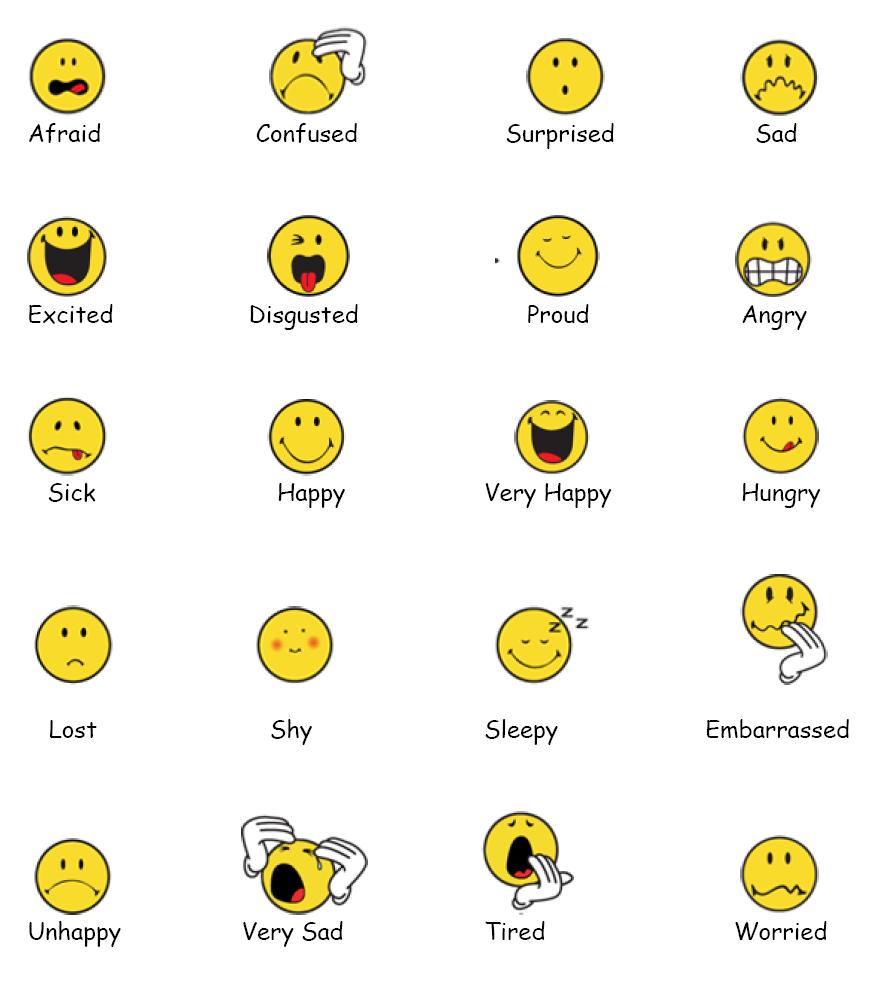
Feeling Faces Chart

The other day I was having a conversation with a good male friend who asked if I'd tried online dating yet.  Backstory: I had previously mentioned I might try it this year, but when that little tax cut came to an end and I saw a decrease in my paycheck, I decided that online dating sites was not in my budget.  Therefore, at this point I am not currently putting in any effort into dating or romance.  On top of that, my responsibilities at work are in the process of changing and we are understaffed, which means I'm doing the equivalent of about two and half people's workload.  Oh, and on top of that, I am taking a class that requires research, interviewing, transcription, and many hours of writing. And I'm taking care of myself - mind, body and spirit.  So...I'm kind of busy.

I get along with a lot of people.  I wouldn't say that I have a lot of close friends, but I have a lot of friends.  Many of my friends are men, and I'm the kind of person who stays friends with the people I've dated in the past, so there's that element that sometimes gets into my relationship dynamics.  I am also friends with men who are married.  Some of those men are unhappy and are pretty vocal to me about their unhappy marriages.  (Now, I know what you're thinking.  And no, you're wrong.  The minute a man talks to me about his unhappy marriage, I ask him what his responsibility is in making the marriage work. I'm not stupid.)

Let me tell you a little about me.  I'm spiritual.  I have two degrees and working on a third.  I'm curvy and working on getting rid of the chunky parts.  I'm one of the healthiest people in my family's history.  I speak two languages and understand a couple more.  I'm pretty smart.  I can cook (I mean, I can throw down in the kitchen, pretty much).  I write.  I can hold a note.  I can shake what my momma gave me.  I laugh a lot and I have a lot of laughs.  I smile practically all day, every day.  I'm a human being, I make mistakes and I own up to them.  So...what's missing?

My male friends acknowledge these things about me, and sometimes, dare I say it?  The married ones wish their wives had some of my qualities.  And they wonder, out loud, why I am single.  This is usually how the conversation goes:

Guy: Why are you single?
Me: I don't know.  I haven't met anyone who wants to commit.
Guy: Well, have you tried...
  1. Online dating?
  2. Taking up a hobby?
  3. Going out to bars?
  4. Church?
  5. Dating me? (Yep, some of the married ones have tried this.  I don't talk to them much anymore.)
Me:
  1. Yes (kind of).
  2. Ain't nobody got time for that!
  3. No, unless I want to get shot.
  4. Haha that's one of the worst places.
  5. Sure, I'll go out with you as long as your wife comes along.
Guy: But I just want you to be happy.

PAUSE. Take a look at the third paragraph.  The one about me.  Again, I don't claim to be perfect.  However, I do have some great qualities and I'm usually smiling and laughing.  That's usually a sign that a person is happy.  The statement "I just want you to be happy", in my case, implies two things:
  1. A woman can't be happy without a man.
  2. I'm not happy.
And here's where the fallacy about happiness gets axed: Happiness is an emotion, like any other.  Happy, sad, confused, tired, excited, etc. are temporary emotions that NO ONE experiences all the time (unless you suffer from clinical depression, and even then, those emotions are more complex than sadness).  If we were happy all the time, we would take that emotion for granted.  So, am I happy all the time?  No.  But do I lack happiness because I don't have a man in my life on a consistent basis?  Not at all.  Would I be happier with a man in my life?  Maybe some days, but I'm pretty sure that for at least one week out of the month I would feel homicidal.  

I'm grateful for the people I have in my life.  I'm grateful that when I eat what I cook, sometimes I say I want to marry myself.  I'm grateful for my curves, my pretty hair, my expressive eyes, and basically my overall awesomeness.  I'm grateful for my heart, which fights to stay open because it understands that love comes with the risk of pain but it also comes with the possibility of overwhelming love. So I'm grateful.  

Since when is a grateful person not happy?

I promise you, my friends who just want me to be happy, that I am happy, most of the time.  And when my life partner decides to walk the rest of this journey with me, he's not going to be the period - the validation that I have done all I could to be perfect enough to deserve a good man.  No, he's going to be a human being, just like me, with great qualities and a beautiful heart.  And we will walk this journey together - happy, sad, excited, confused, hurt, angry, bitter, and happy again...but together.


Saturday, November 10, 2012

Mirrors

For most people, vacations are a time to get away and have fun, and even get their "groove back".  For me, vacations have a different purpose.  I live a very busy life working, going to school, and coordinating a women's leadership program.  Most of the hours of my day are dedicated to something or someone else, and the little bit of time I have for myself is usually spent exercising, cooking, eating, studying, and sleeping. There is little left for the things I LOVE to do, such as writing, singing, reading for fun, and introspection.  When I go on vacation, it is usually so that I can get away from the demands of life much like it is for everyone else, but it is also so that I can retreat and have some peace and quiet to reflect on who I am, where I am, who I am becoming, and what lessons life wants to teach me.

Most times, I take these vacations alone.  Sometimes, I go with a friend.  The friend I most often go with  is someone who has been in my life most consistently in the past few years, but I've known him since I was ten years old.  Although our reunion almost four years ago originally occurred with the idea of dating and developing a relationship, this did not work out.  Blog post upon blog post refers to the story of our relationship, which ends on one level and begins again on another.  To put it bluntly, we can't seem to let each other go for good.  While the feelings and interactions aren't always the greatest, I've come to understand that there is something we need to learn from one another, and although I sometimes feel weak and, frankly, stupid for continuing this undefined relationship, I trust that I always know when something must end and when God closes a door.  

Our last trip was just a few weeks ago.  It was a few days after my 41st birthday and I honestly had planned to go away alone to spend time reflecting on another year of life, but in the planning stage of this trip, my friend offered to go with me.  I couldn't understand why he wanted to travel with me, since the last time we traveled together I was extremely hateful towards him (see my blog post about that here).  His response was that I had "vented" all of my feelings already, so he figured I would be fine.  This was kind of true, actually.  So we went to Orlando for a few days and I was prepared to be as nice as possible, especially because all of my "venting" the last time I saw him wore me out.  

While my expectation was that things would be calm because I was calm, that wasn't necessarily the case.  He has a really subdued demeanor so he never really gets out of control, but he's very sarcastic and blunt.  In the first few hours of our trip he asked me a couple of sarcastic questions regarding other men, and decided that he was going to point out something he didn't like about me.  I ignored these things because I was trying to be peaceable and decided these statements were not worth pursuing.  But the next day, when I asked a question as a joke, he sharply told to me to stop asking rhetorical questions and that he really doesn't like when I do that.  He was more than irritated.  I told him that he should really let it go because it's not that important, and that I wasn't going to spend my time on vacation arguing about something so trivial.  But in the back of my mind I understood that his irritation wasn't really about my habit of asking rhetorical, sarcastic questions to be funny.  It was "his turn" to be mean to me.  

Later that night, we were at dinner and somehow the conversation turned to us spending time together.  I asked him, "If you really don't like me as a person, why are you here with me?"  He responded that he knows who I really am and he loves who I really am, but that I am always in protection mode because of my past experiences and having been taken advantage of by other men.  He urged me to be myself and stop trying to protect myself all the time, because when I'm protecting myself, I am keeping others at arm's length. 

I took in this feedback with complete understanding about what he was experiencing with me.  However, because part of this conversation referred to my ugly actions during our last trip (which he claimed to have forgiven me for), I began to internalize our entire interaction that day as hurtful. We argued in the car on the way home, and later that night I said, "Let's agree that the next few days we will try to be ourselves and let go of the things we don't like about each other, because these next few days will be the last few days we'll ever spend together."  (Italics emphasize where I spoke out of hurt.) 

The next day, we went to the Epcot International Food and Wine Festival and had a really nice time.  The environment was pretty, he had never been there before, and experiencing it with him helped me see things with new eyes.  We had tons of food and drinks, took pictures, sat and enjoyed each other's company in a way we hadn't in a very long time.  In other words, we kept our agreement.  

The next day was our last full day together, and it was kind of somber.  It was low-key, and while we were together, we each did our own thing - he was working on his computer and I was reading by the pool for class.  We are both writers, and I was reading one of his screenplays about his relationship with his mother.  What I read helped me to understand him a lot better, and why our relationship was so difficult.  He is always in protection mode because of his past experiences.  He does not show who he really is, and he keeps others, including me, at arm's length.  The more I point out to him the things I don't like about him, the more he shuts me out.  The more he points things out to me what he doesn't like about me, the more I push him away (refer to the italicized statement above).  

I share all this at the risk of sharing too much information about myself and this person to illustrate that our relationships - especially the ones we don't necessarily ask for - provide mirrors for self-reflection.  After the trip, I sent him a text with a nugget of wisdom I heard from Iyanla Vanzant, a spiritual guide who has a show on the OWN channel.  She said, "The deeper you fall in love, the more unloving you will behave."  His response?  "Yeah that sounds like you."  My response?  "You too! We are mirrors for each other."

One of the most influential people in my life, a professor in my counselor education program, once told me that we are mirrors for each other.  That statement opened my eyes and helped me understand my relationships.  We are drawn to those who are like us at the soul level, whether we like it or not.  And we are drawn to each other because we need that mirror to show us what we need to change about ourselves.  

It is the brave one who can look in the mirror and be completely honest about what needs to change.  It is the courageous one who will not behave unlovingly towards the one who serves as a mirror.  When we are unloving towards each other, we are unloving towards ourselves.  Look at the person who serves as a mirror in your life and say, "Thank you.  I love you for showing me, me."  And do the work so that the next time you look in the mirror, you absolutely love what you see.  


Saturday, September 15, 2012

What IS Love, Really?

Courtesy of ghank.com
Love.  We all talk about it, think about it, sing about it, write about it, dream about it.  It is something that we all believe we have experienced.  I love my mother, I love children, I love my job, I love shoes, I love pizza.  We use the term love to express admiration, care, respect, connection; any emotion that is positive, really.  But do we really know what love is?

I had been pondering this question for awhile because of a recent experience.  It actually goes back months, maybe even years.  For many years I had shut down emotionally because of several losses I'd experienced, and it got to the point where I felt nothing.  Then someone I had known for almost my whole life came back into the picture.  As soon as I would use my best "put your guard up" techniques, he went to work dismantling them.  I was in shock and taken aback because he didn't take what I said at face value and walk away, like many had done before, and like I was secretly hoping he would do so that I could blame him for not wanting to develop a relationship with me (like I had done many times before).  I'm a talker, and sometimes I would just have to be quiet and process what was happening.  This person was not accepting my emotional unavailability.  He was forcing me to be uncomfortable with my comfort zone.

Throughout the years, we went through good times and bad times.  In the good times, I felt very much at home and safe.  In the bad times, I felt angry, taken for granted, and taken advantage of.  If I shared details, you would probably agree that many times those negative feelings were justified.  However, that doesn't really matter.  What matters is that I was actually feeling something.  When I woke up one morning after months of stomach aches that I attributed to anxiety and fear and realized, "I love him", the fear and the anxious stomach aches went away and I felt peace.  It was never easy with him, but I was actually feeling, and for some reason, that gave me great joy.

The last time I saw him, I had pretty much decided that there was no future for us.  I spent a lot of time lashing out at him, telling him that he was incapable of loving me, and eventually the words (that I tried to hold back even as they were tumbling out) "I hate you" came out of my mouth.  I'm not gonna lie, I'd had a couple of drinks and hadn't eaten, but that still doesn't justify those words.  After I realized that my words helped end my marriage many years ago and were now going to end this relationship, I started to cry as if someone died.  I went to the person who I'd just said "I hate you" to, and he held me while I cried uncontrollably.  He just held me and let me cry for what seemed like the longest time.  Then I said to him, "I love you more than anyone I've ever loved".  It was then we both agreed that there is a very thin line between love and hate, and within that line dwell our deepest fears about being abandoned and rejected.

I left that particular exchange wondering how powerful love is; so powerful that it could turn into hate.  Then I wondered about how we use the word love and make it so trivial.  We think we know what love is.  People say that love is never hard, but I knew my experience had been difficult and challenging.  I knew that anyone who could hold me after I had told them "I hate you" was clearly more capable of loving me at that moment than I could ever be.  I came home and thought about what the Bible says about love:

Love never gives up.
Love cares more for others than for self.
Love doesn't want what it doesn't have.
Love doesn't strut,
Doesn't have a swelled head,
Doesn't force itself on others,
Isn't always "me first,"
Doesn't fly off the handle,
Doesn't keep score of the sins of others,
Doesn't revel when others grovel,
Takes pleasure in the flowering of truth,
Puts up with anything,
Trusts God always,
Always looks for the best,
Never looks back,
But keeps going to the end.
Love never dies.

- 1 Corinthians 13: 4-8 ("The Message" version)

After all these years of not allowing myself to feel, I learned what love really is from being in this very hard, very emotionally challenging relationship.  I wanted what I thought I deserved (because of my "swelled head").  I kept score and very eloquently relayed all the details of his wrongs.  I forced my way of doing things on him, and when he wouldn't accept them, threatened him many times with "losing me".  And God knows I flew off the handle.

So how can I say that I learned what love really is?  Because I did all of the things love is NOT, and he accepted me anyway.

To be continued...


Saturday, May 5, 2012

"Good" versus "Good Enough"

It's been a little while since I wrote on the topic of relationships.

Perhaps it's because I allowed the disillusionment and disappointment that has developed over the past three years to shut my heart up, nice and tight.  The wall that comes down little by little when someone works his way into your heart also goes back up little by little, practically unnoticed, with each promise that is unkept, each word that is not followed up with action.

I struggled over the past three years on and off in a relationship with someone who claimed to love me, but couldn't seem to do anything about it.  I've written about him in various posts, often in relation to some life lesson I'd learned.  The lessons were all necessary, because for many years I journeyed through life without being fully present.  My heart was closed off due to the betrayal I'd experienced as a result of divorce.  I turned  to religion and spiritually to protect me from people.  I retreated into my pain and became distrusting of all people, and I came to expect that I would be disappointed if I engaged in meaningful relationships.

Three years ago, this old friend of mine came back into my life and insisted on being a part of it.  I never saw this coming.  I could tell that he was interested in me, much as he had been when we were children, and he was just as persistent as he had been when he would ask me to be his girlfriend every day in the sixth grade.  I wasn't into it back then, but after the last few years of dealing with men who beat around the bush and couldn't commit to even a day, time and place for a date, I came to appreciate the directness with which he asked for my number and made plans to visit.  Through our phone conversations and subsequent dates, I was enjoying myself more and more.  However, I lived in constant anxiety.  We would have great times together, and I would fight it the entire way.  I was enjoying myself and telling myself that I shouldn't have been having so much fun with this person.  I told myself that the next time I saw him would be the last, because it was obvious that he wasn't good enough for me.  He wasn't as Christian as me.  He wasn't thoughtful and didn't buy me gifts.  He liked to drink and party too much. He flirted with other women.  He wore his hair in braids for God's sake!  Here I was, going to church, singing in the choir, working and building my women's leadership program to empower young women, with a Master's degree and planning on obtaining a doctorate, and I was dating an almost middle-aged man with braids?  Who sometimes wore sunglasses indoors?  Was I that desperate for male attention?  Was I settling for less?

My friends would say, "He doesn't deserve you."  "He's not good enough for you."  "He's wasting your time."  My church indoctrinated me to believe that if he wasn't "saved, sanctified, and filled with the Holy Ghost with the evidence of speaking in tongues", then I should not even let him have my phone number, much less go out on a date with him.  My mother made it clear that any man who didn't want to meet her would never be good enough for our family.  Honestly, I wasn't sure I wanted my family to meet him.  Even my little great-niece, not yet four years old when she met him, called him "The Little Boy".  Out of the mouths of babes.

Here's the thing.  He's brilliant.  He's one of the most intelligent people I know.  On top of that, he wasn't threatened by my intelligence; he was just as attracted to my brains as he was to my body.  It was the first time in a long time that I didn't feel objectified by a man.  I felt like a human being, understood and appreciated for something other than my physical appearance.  It was this person who talked about his writing with so much passion that awakened my desire to begin writing again.  It was this person who helped me work on issues that I'd refused to address.  He challenged me to stop acting like a victim and take control of my life.  He encouraged me to be myself and accept myself, the good and the bad.  In accepting myself, I realized that I needed to accept others.  Even him.  I became less judgmental and more forgiving.  I stopped measuring others' relationships with God by how often they went to church or how much they talked about God.  I started opening my eyes and allowing myself to see the world through others' perspectives, and little by little, my heart opened up as well.  I had him to thank for that, and I was grateful; so grateful that I couldn't let him go.

Throughout our entire relationship, it was clear that we were walking two different paths.  Every time I mentioned it, he reminded me that he loved me and that I knew and understood him.  I told him that it was because I knew him so well that I knew he couldn't give me what I wanted most in life - a family.  I told him that it was because I loved him so much that I couldn't ask him to do something he didn't want to do.  He told me that because I was a great woman and he didn't want to lose me, he would think about trying to give me what I wanted.  He told me that he's loved me since we met in the sixth grade, but he needed time to follow his own path before even thinking about including me in his world on a permanent basis.  In other words, he wanted me to wait for him to accomplish his goals before he would even think about the possibility of partnering with me to achieve my dream of having a family.

Eventually, I realized that I needed to let go, not because he wasn't good enough for me, as I'd previously thought, but because he wasn't good for me.  A person who is good for you wants you to achieve your goals.  A person who is good for you doesn't stop you from moving towards your deepest desires.  A person who is good for you will challenge you, yes, but will accept you,  love you, and try to understand you.  A person who is good for you will help you grow and, as a result, your heart will be open to love all people.  A person who is good for you will support you and be happy for you as you move forward, with or without him.

I struggled to let go for so long because I thought I was being guarded and judgmental, thinking he wasn't good enough for me.  For awhile, I was.  Then I realized that there was a difference between someone being  good enough for you and being good for you.  This person, who never says "I can't" when it comes to what he wants and needs, said "I can't" to a commitment with me.  When I heard those two words, I understood. In my life, I never want to partner with someone who doesn't believe he can walk this journey called life with me.  In a sense, he himself doesn't think he's good enough.  And for me, that's just not good.  Period.


Saturday, March 31, 2012

Boundaries: Honoring Your Self

Whenever I write about a particular topic, I usually like to look up some information about it before starting to write.  I have a habit of wanting to intellectualize whatever it is I'm writing about, even if it's personal and from the heart.  I often share what I've looked up, and I'm famous for quoting the dictionary or Wikipedia.

I started to do that this time, but then I stopped.  What I'm writing about today is too personal and doesn't need to be validated by outside sources.  I reserve the right to create my own discourse about this particular topic.  I'm referring to the concept of boundaries.

Boundaries are personal limitations - the so-called "invisible line" that we draw - that we have decided others may not cross.  The interesting thing about boundaries is that others continually believe they can judge our personal boundaries even though they do not set them for us.  The other interesting thing about boundaries is that we usually don't set them until someone has crossed the "invisible line" within us.

I have worked with students in various capacities throughout my almost-twenty year career, and boundaries are an issue that continuously needs to be addressed.  For example, as a first-year teacher, I made the "mistake" of buying a student a sandwich (with his money) when I went out for lunch.  My assistant principal told me never to do that, because it was unfair to the other students who had to eat school lunch (which is still terrible), and because it was impossible for me to be able to keep up that behavior.  I learned quickly from this mistake, and never did it again.  However, my assistant principal also told me it wasn't a good idea to allow students to spend their lunch period in my classroom, and in that case, I didn't agree with that boundary.  I knew that my classroom was a safe place for some of those students, and it avoided conflicts that could arise in a crowded cafeteria.  Eventually, I had to decide what boundaries needed to be in place and which ones really weren't necessary.  Students were allowed to remain in my classroom during their lunch period, unless I had something else I wanted or needed to do.

After two years at that school, I worked at a small high school where boundaries were much more lax.  Students called us by our first names, and you would often see teachers (or "facilitators", as we were called) and students spending informal moments together during and after school.  My students kissed me on the cheek and hugged me, and I often spent time with them and their families.  It was a loving environment, but I had a difficult time with how flexible the boundaries were.  I didn't know when my work life ended and my personal life began, because it seemed a part of that school's culture to spend time with students outside of school.

I worked in a residence hall for three years.  Can you imagine the difficulty in maintaining boundaries there?  I would have to wake up in the middle of the night to discipline students and write full incident reports in my pajamas while half asleep.  It was truly a blend of my personal and professional lives.

Recently, I experienced a test of both my professional and personal boundaries.  Being a counselor is definitely not an easy vocation.  Counseling is a very personal relationship within the confines of a professional environment.  Over the past year, several students have made the comment that they love our counseling relationship because, and I quote, "It's so personal."  Some of my colleagues don't approach the counseling relationship in the same way.  Some frown upon the fact that some students have my cell phone number, which I only give out for specific work reasons.  If my women's group is holding an event on a Saturday, the students may need to reach me, so the easiest way to do so is to contact me via phone.  Some colleagues choose not to engage in that way, and I respect that.  I learned in my counseling program that I am a counselor; it's not just what I do but who I AM.  Therefore, my counseling style is person-centered, and with the particular population I serve, being intrusive is effective.  In addition, I connect with others on an emotional level, and my empathy for others creates a close, personal relationship.

While I recognize that being authentic and having unconditional positive regard are keys to a good counseling relationship (according to Carl Rogers' Person-Centered Theory), I learned that I can't expect every student to understand my boundaries if I don't make them abundantly clear.  I allow my students to disagree with me, and to challenge and question what I say, however, I experienced a moment when a student went too far.  Both my emotional and physical boundaries felt threatened.  While we had previously had discussions about how this student mistreats, and even abuses, people she cares about (including me), this time I realized that I could no longer engage with her personally or professionally, and suggested that she request a counselor change.  Although I want the student to work through the problem, I also refuse to be emotionally and verbally abused by her.  My hope is that the student learns, through the termination of our counseling relationship, to manage her emotions so as not to alienate others to the point of destroying her most valued relationships.  My lesson is a difficult one to learn.  Most people respond well to my counseling approach, but I will have to make sure that my boundaries are clear - that while I welcome students to question and challenge me, they must do so in a respectful manner, especially because I take great care to show my students respect first.

Personally, I realized that my emotional boundaries were being repeatedly crossed by the same person over the course of the past three years.  This was a pattern with most of my personal relationships with men; I was allowing them to expect more from me than they were willing to give.  This particular person is my "Mr. Biggs" (along the lines of the Ron Isley persona rather than the "Mr. Big" of Sex and the City fame; Mr. Biggs just sounds funnier).  It's obvious that we are strongly connected and that, in the smallest, most pure place in his heart, he loves me very much.  However, much like Mr. Big in Sex and the City, he has a habit of both pulling me into his world and forgetting me at his convenience.  I've spent most of the past three years trying to convince him (and myself) of how we want very different things in life and how love requires commitment, action and follow through.  Most recently, it finally occurred to me that it wasn't him I needed to cut off, despite the veritable choir of voices advising me to do so.  It was ME.  I had to set a boundary within myself that I would no longer allow myself to cross.  As much as my heart wanted to reach out to him to show him I cared, showing him love was an invitation for him to make empty promises and continue to disappoint me.  I had to realize that what I expected of myself - integrity, accountability and authenticity - were exactly what I expect from the person I choose to partner with in life.  Whenever he demonstrated the opposite of those traits, I was allowing him to cross the most valuable boundaries - those I had set up for myself.  Whenever I allowed him to cross those boundaries, I was violating my own boundaries.  Now, because he won't stop contacting me any time soon, and I don't need to be dramatic about it, I can respond to him from a place of empowerment.  The very boundaries I created for myself are those no one else will ever be able to cross.

People will want to see how far they can go, how much they can take you for granted, or how little effort they can put into getting what they want from you.  You can't control them.   It is up to YOU to make clear to yourself what you are willing to tolerate, and what is unacceptable.  Boundaries are very personal.  In the end, you have to live with yourself, and no one else.  I know that I want to live with my self-respect intact, and so I will honor my personal boundaries.  In doing so, I honor my deepest self.

Monday, August 22, 2011

Yes, I Am C.A.T.T.Y. (and proud of it!)

I just got back home from a very energizing evening, so energizing that, even though I would be normally be getting ready for bed at this time, I feel like writing. What did I do this evening that energized me?  I spent the past four hours chatting with a woman, a sociology professor that teaches at the college where I work.  

Last Thursday, I had lunch with another woman who is the President of the Chamber of Commerce in the county where I work.  I'd met her at a luncheon for an alumna of the college, and the following semester she did a workshop on advocacy for the young women's leadership program I coordinate.  Since then, she's been a big supporter of my women's program.  

At church yesterday, a woman that I've known for the past seven years through our small group came and sat next to me.  We hugged and talked during the announcements and offering.  

What were the topics of conversation with these women?  Well, the woman at church and I were talking about the classes we would be taking this semester.  She's a mother of two with a busy husband whom she sells real estate with, while writing for a newspaper and writing lessons for the church small group curriculum, who is also pursuing a Master's degree in Social Work.  I'm not married and I don't have children, but on top of my job, I run a women's leadership program that takes up a lot of my time.  I also take time to go to New York City as often as possible to help care for my elderly mother.  I run my household by myself, try to get to the gym a few times a week, and now I am starting a doctoral program in Higher Education.  I hadn't seen this woman in over two months.  Could we have caught up on church gossip?  I'm sure.  However, we were more interested in talking about how we were planning on balancing our busy lives with the expectations of graduate classes.

The President of the Chamber of Commerce and I talked about fear.  I told her that I would be starting school in about a week, and that I was scared.  She told me that for the past eight years since she's been President, she's woken up scared, telling herself, "I'm going to my new job."  She said, "For eight years, I've been calling this my 'new' job!"  And she told me something that will stay with me for the rest of my life: "If you aren't scared, you're complacent.  It's good to be scared.  People who are scared are people who take risks."

The sociology professor and I had dinner with her son and his friends, then sat down with coffee and talked about pedagogy (a fancy word for "teaching").  We discussed a strategy I'd learned in my master's level counseling program, and talked about ways she could use it with her students.  We brainstormed a few more ideas, then talked about the process of connecting with others, and finally we talked about power and strength.  I told her about my journey toward embracing my power, and how for some people, my power could be intimidating or overwhelming.  Her words: "You are the Presence of Health (or the Divine, or God), and sick people will either be drawn to you because they want to be healed, or they will want to destroy you because you expose their illness."  Deep, right?

While the television networks are showing us images of women fighting each other and exposing either their thongs or their Spanx on so-called "reality shows", REAL women are having REAL conversations.  While society would have us believe that women are catty (as in spiteful or vindictive), I am having conversations with strong, amazing women who are supportive of my strength, as opposed to competing with me to see who's stronger.  

Women and men both say that women are catty.  They say it without thought, as though it is a given.  Every time I hear that comment, I say, "I beg to differ."  I have seen the difference that confidence and support make in my own life as well as the lives of the young women I work with.  I don't see anything catty about the women I encounter.  However, if you still think I'm catty, or that the women you work with, or go to church with, or network with are catty, then I'll agree, as long as you know that we are:

C - Confident and strong
A - Aware of who we are 
T - Tenacious and persistent
T - Tantalizing (We're women, how can we not be?)
Y - Young at heart, in mind, and in spirit

So go ahead, call me C.A.T.T.Y.  I'm proud of who I am, and of the women I know who aren't afraid to be C.A.T.T.Y. too!

Wednesday, August 10, 2011

The Waiting List

In May 2011, the class that entered college when I started my current job graduated.  This class inspired change on our campus; from participating in protests and rallies to becoming student leaders in residence life, student government, and cultural clubs, they literally took over the campus and turned it into a positive, more diverse environment.  However, the beginning of their senior year was fraught with emotion: elation at making it to senior year when some of their cohort didn't, sadness at the thought of leaving the place they'd called home for four years, and worry over what their future held, especially in these tough economic times.  I had grown extremely close to this class over the past four years, so I attempted to help them through the transition from college to "The Real World".

Many of these optimistic "Generation Y"-ers wanted to do something that would make a difference in the world, much as they did in college.  As college students, they raised awareness about issues affecting people around the world, studied abroad learning about healthcare and education disparities, and spent their own money donating to enterprising women in developing countries.  They applied to jobs and internships through various non-profit organizations. Throughout this process, some of them expressed their concern about not finding something right after graduation.  Some of them watched as their peers got accepted into programs or internships or got jobs.  While they attempted to support each other as a group, individually their anxiety was mounting as graduation day grew closer.

A few of these students were placed on the waiting list for positions they had interviewed for.  I received this news from them along with a mixture of hope and disappointment.  My duty as a counselor was to remain positive and tell them that they were great and would be chosen for their coveted positions.  I also attempted to convince them that, in waiting, they could rest and spend time on leisure activities or on personal growth experiences.  Of course, as they waited, I also held my breath in a figurative sense.  These students were such amazing people who brought me joy just by their mere presence and could transform the atmosphere of any room they walked into.  One by one I received emails and text messages saying, "Ms. G, I got in!"  And my response was, "Well of course you did, what did you expect?"

The "waiting list" is one of those concepts that evokes a multitude of conflicting emotions - worry and anxiety, relief and hope.  It can cause self-doubt, have us wondering why we weren't chosen first, even lead to a lowering of our standards and expectations.  The process of waiting can also be an invaluable experience.  In waiting, we can rest, recuperate, and reflect on our past experiences and what we want to take with us as we move forward in our lives.  In waiting, we are growing in the safety of a cocoon that we know, even while that very cocoon might start to become uncomfortable as we grow and transform.

I have been waiting a while for certain things in my life.  At this point, I've been "chosen" to receive some of my desires, but I'm still waiting for some to be fulfilled.  In the process of waiting, I've learned that everything I want might not be what is best for me at this particular moment.  I've learned to let go of expectations that had nothing to do with my personal values and were more learned behavior.  I've learned to accept myself for who I am while holding on to the perseverance and resilience necessary to move forward in life.  Although I still wait for some of my heart's desires, I appreciate the lessons I'm learning in the process of waiting.

Recently, I spent time with someone who I had been dating on and off for a while.  We'd both been divorced and were guarded and cautious about committing to a relationship.  I told him that, despite our strong connection, I knew we were looking for different things out of life, and I shared that I desire marriage and children.  After having time to think, he told me that, although he never considered remarrying, my desire for a family is causing him to rethink his perspective.  Of course, the process of "rethinking" for him translates into a process of waiting for me, if I so choose to.  Much like my students, the idea of waiting brings me anxiety and hope - anxiety that I might be waiting for something that might never happen, and hope that somehow, it will.

Most recently, he and I took a walk on a beautiful pier, and as I felt the breeze and listened to the waves gently rocking against the docked boats, I said to him, "This is the life I want to live."  His response: "You're living it RIGHT NOW."  Those five words put waiting into perspective for me.  I'm actually NOT waiting, I'm LIVING.  And, as all living beings do, I am growing, learning, evolving, and maturing.  So, although I might think I'm on the waiting list, in reality, I'm right where I need to be at this very moment, and I choose to enjoy it.  This moment, RIGHT NOW, was worth the wait.